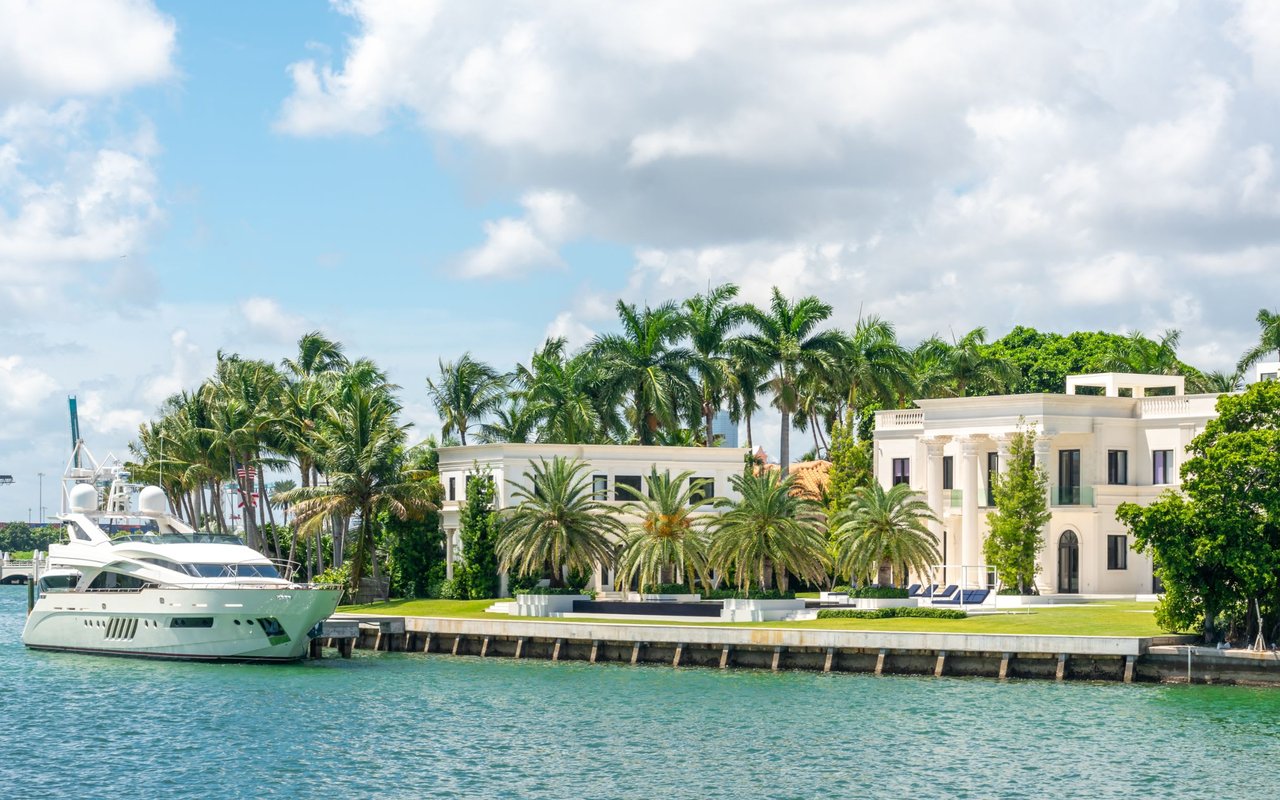
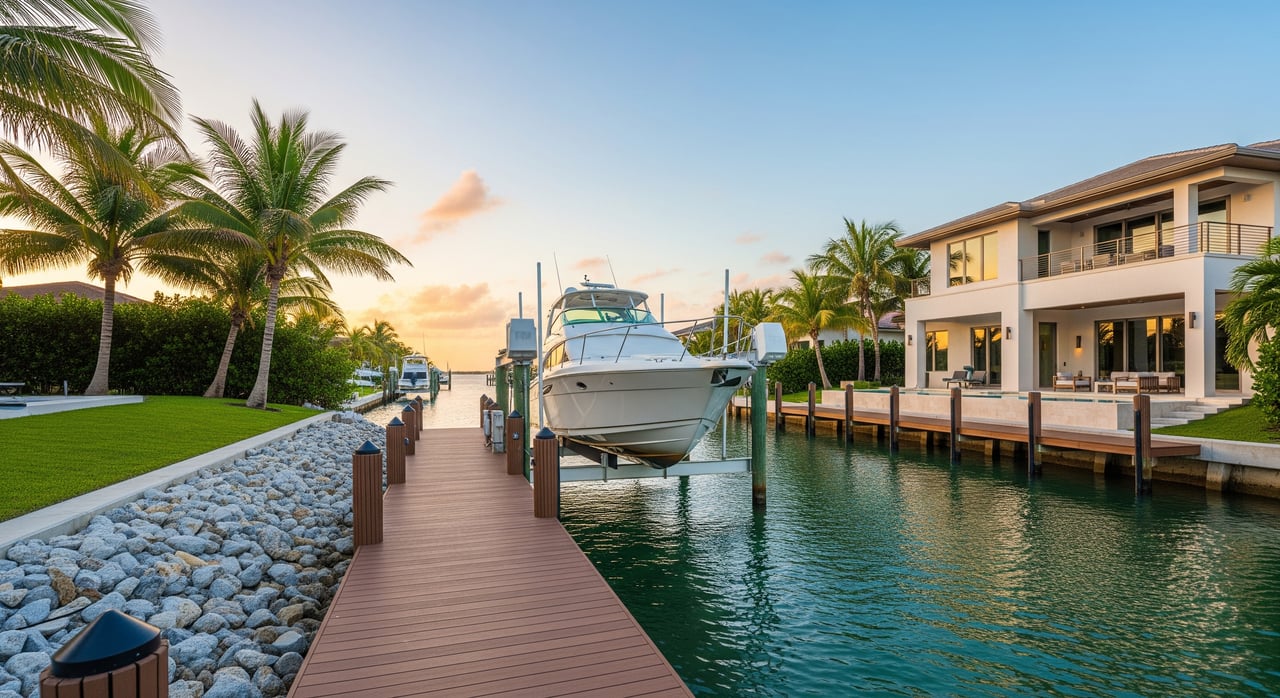
Picture this: you step from your back dock, idle across calm canals, and point your bow toward open water for a morning run to the Gulf. If you are shopping in Aqualane Shores, the type of Gulf access your home offers shapes that daily routine. Getting this right affects your boat size, your upkeep costs, and how quickly you can get out on the water.
In this guide, you will learn what “direct,” “lift,” and “no-bridge” access mean in Aqualane Shores, how each impacts convenience and vessel selection, and the key due diligence steps before you buy. You will also find a simple checklist to use during showings. Let’s dive in.
What Gulf access means here
Aqualane Shores sits on the northern edge of Naples Bay, with a web of residential canals that flow into the bay and out through Gordon Pass to the Gulf of Mexico. Your everyday route is coastal and straightforward: leave your private dock, cross Naples Bay, and follow the marked channel to the pass.
Direct Gulf access
Direct access means you can reach open Gulf waters without detouring through long inland routes or dealing with low fixed bridges that force you to lower arches or antennas. In Aqualane Shores, direct access typically implies a quick run across Naples Bay and out Gordon Pass. You get fewer physical constraints on air draft and shorter transit times.
No-bridge access
No-bridge access means there are no fixed bridges on your route that limit height. In practical terms, you do not need to lower a radar arch, outriggers, or mast to reach the Gulf. In Aqualane Shores, the typical route to the Gulf does not include low fixed bridges. Still, it is smart to confirm there are no fixed obstacles or overhead utility lines near the dock or along your canal.
Lift-equipped docks
A lift is a mechanical system that hoists the boat out of the water at your dock. Lifts vary by capacity and design, and they can be a major convenience for storage and maintenance. A lift does not change navigation constraints like depth or channel shape. It simply affects how you store and care for the vessel and what size and weight the dock can handle.
How access affects boat size
Matching your boat to your dock and route is essential. Three physical factors dominate the conversation: length, beam, and draft, with air draft relevant if any fixed obstacles exist.
Length and beam
Canal dockage is driven by the length of the dock face and mooring layout. Many Aqualane Shores properties can host larger boats, while others are better for smaller center consoles and runabouts. If a property includes a lift, confirm its rated capacity and beam limits. Wide modern boats might exceed the cradle width of older lifts or narrow slips.
Draft and depth
Depth varies among residential canals. Draft is especially important for keel boats and deep-vee sportfishers. Ask for recent depth soundings at mean lower low water for the slip and the path to Naples Bay. Channels are dredged periodically, and depths can change between projects, so current measurements matter.
Air draft
On the usual Aqualane Shores route to the Gulf, fixed low bridges are not part of the picture. That means most boats do not face height limits on the way out. Still, verify that your specific canal and dock area are free of any fixed obstructions or overhead lines that could interfere with towers or antennas.
Convenience and daily routine
How you like to boat should shape the access you choose. Consider launch time, maintenance routine, and how you plan for weather.
Launch and retrieval
With direct, no-bridge access, you can be out of the canal and into Naples Bay quickly. This is ideal for sunrise fishing, beach runs, and sunset cruises. If you have a lift, launch is as simple as lowering, untying, and going. It is fast, but it still takes a few minutes to manage the cradle, lines, and fenders.
Storage and maintenance
A lift keeps the hull out of the water, which reduces bottom cleaning and can cut routine maintenance. It also makes light service tasks easier because the boat is stable and dry. Keep in mind that lifts require their own care. Electrical and mechanical systems need periodic service, and you should monitor weight and balance to protect the hull.
Storm readiness and insurance
Some owners prefer lifts for storm prep because the vessel can be secured higher and closer to the seawall. That said, major storms may call for offsite plans. Insurance carriers often look at your dock configuration, lift setup, seawall exposure, and proximity to Gordon Pass when underwriting. A lift can be a plus in calm conditions, but it is not a guaranteed premium reducer.
Safety, tides, and navigation
Aqualane Shores offers a short, sheltered run to the Gulf, but you should respect local conditions.
Naples Bay to Gordon Pass
Gordon Pass is the primary deepwater outlet to the Gulf. Tidal flow can be strong around changes of tide, and conditions may shift quickly. Channels and markers can move as maintenance projects occur. Many local operators plan departures and returns around slacker water, especially for smaller boats or inexperienced captains.
Tides, currents, and shoaling
Shoaling can occur near pass entrances and shallow flats. Depths and buoy positions may change between dredging cycles. Keep your charts current, and rely on verified local updates when you schedule your first runs after purchase.
Night operations and speed zones
If you plan to run at night, confirm your lighting, keep a careful eye on navigation aids, and follow local speed limits through canals and the bay. Night visibility on the water can be challenging. A conservative approach keeps you and your neighbors safe.
Due diligence for buyers
Before you go under contract, bring a boater’s mindset to your inspection list. You want the property and the dock to fit your vessel and routine.
Documents to review
- Canal depth soundings at mean lower low water for the slip and the route to the pass
- Dock and lift documentation, including builder specs, load plates, and recent service records
- Seawall permits, age, and repair history
- Neighborhood rules around dock changes, boat size, and use
- Local dredging history or upcoming plans that affect canal depths
- Flood zone information and elevation, which can impact insurance
Questions to ask
- Is the dock private or shared? Are there recorded access agreements?
- Does the dock have a lift? What are the make, model, capacity, beam limit, and last service date?
- What is the usable dock face length for your boat’s length overall?
- Are there documented depth soundings? When were they taken and to which tidal datum?
- Have there been recent shoaling issues or access restrictions in the canal or along the route?
- Are there deed or HOA restrictions on vessel length, beam, or operating hours?
Who to involve
- A marine surveyor or sounding service to confirm depth and fit
- A licensed marine contractor to evaluate dock, lift, and replacement costs
- A local marina or yacht club manager for current channel conditions
- The local permitting office for dock, lift, and seawall records
- An insurance broker familiar with coastal Florida homes and vessel policies
Quick buyer checklist
- Verify dock face length, piling positions, and mooring layout for your boat’s length and beam.
- Obtain recent depth soundings at mean lower low water for the slip and the full route to Gordon Pass.
- Confirm lift presence, capacity, beam limit, and service history if applicable.
- Confirm there are no fixed bridges or overhead obstructions on your route.
- Note typical tides and currents at the pass and estimate your transit time from dock to open water.
- Inspect seawall and dock structure and review permitted maintenance history.
- Review neighborhood rules on vessel size, dock modifications, and guest vessel stays.
- Consult your insurance broker about coverage and any storm-prep requirements.
Property traits that fit your lifestyle
- If you want maximum spontaneity: Prioritize direct, no-bridge access with ample dock face for your boat. This setup favors quick outings and flexibility.
- If you favor low-maintenance ownership: A properly sized lift can cut bottom care and make routine service easier. Confirm capacity and cradle width for your current or planned vessel.
- If you expect to upsize later: Choose a dock and canal layout with room to grow in length, beam, and weight, and review rules for future lift upgrades or dock extensions.
Aqualane Shores route overview
Your everyday run will likely start in sheltered canals, proceed across Naples Bay, and continue through Gordon Pass to the Gulf. It is a nearshore, open-water route rather than an inland trek with multiple bridge clearances. While fast and convenient, plan with respect for local tides and any recent channel changes. Staying informed keeps your boating smooth and predictable.
Ready to explore Aqualane Shores?
If you are considering a waterfront home in Aqualane Shores, the right dock and access can make your boating life effortless. We help you match properties to your vessel, confirm the right specifications, and coordinate trusted local professionals so your first day on the water feels easy. For a private, concierge conversation about your goals, connect with the Taranto Team of Naples Florida.
FAQs
What does “direct Gulf access” mean in Aqualane Shores?
- It means you can run from your dock across Naples Bay and out Gordon Pass to the Gulf without long detours or low fixed bridges on the typical route.
How does a boat lift change my day-to-day routine?
- A lift speeds cleaning, reduces bottom growth, and simplifies light service. Launching is quick, but you will still spend a few minutes managing the cradle and lines before departure.
Does Aqualane Shores have bridge height limits to the Gulf?
- On the usual Aqualane Shores route to Gordon Pass, low fixed bridges are not part of the transit. You should still confirm there are no overhead obstructions near your dock.
How deep are the canals in Aqualane Shores?
- Canal depths vary and can change with shoaling and dredging. Ask for recent soundings at mean lower low water for the slip and your route to the pass before you buy.
What should I check on a lift before purchase?
- Verify capacity, cradle width, beam limits, service history, electrical condition, and permits. Make sure the lift matches your boat’s weight and hull form.
Are currents strong at Gordon Pass when leaving Naples Bay?
- Currents can be strong during tidal changes. Many boaters plan departures or returns around slacker periods, especially for smaller vessels or less experienced operators.