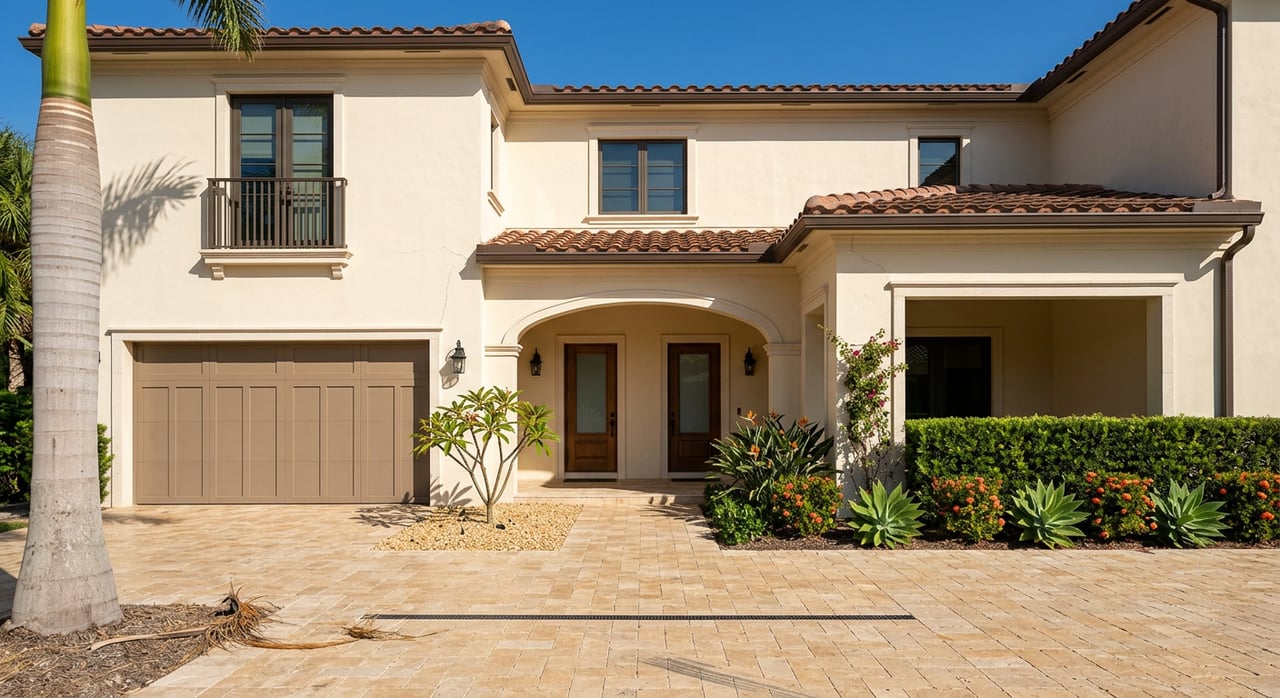
Deciding between a coach home and a villa in Mediterra can feel like choosing between two great versions of the same lifestyle. You want space, privacy, and convenience that fits how you live, whether that is seasonal lock-and-leave ease or a full-time home with more outdoor room. This guide shows you what changes between the two options in Mediterra, how maintenance and fees actually work, and what to verify before you write an offer. Let’s dive in.
Mediterra at a glance
Mediterra is a gated, master-planned golf and beach club community made up of distinct neighborhoods, each with its own rules and services. The community’s governance assigns maintenance and neighborhood obligations through supplemental documents for each area. You can review those neighborhood rules on the official Neighborhood Governance page.
At a high level, coach homes are multi-unit condominium-style residences typically priced below detached villas. Villas are single-family homes in neighborhoods that often include exterior care as part of the HOA. Always confirm the exact services and fees for the specific neighborhood you are considering.
What a coach home means in Mediterra
Layout and lifestyle
Coach homes sit in named sub-communities such as Porta Vecchio, Monterosso, Brendisi, and Calabria. Most offer 2 to 3 bedrooms plus a den and fall roughly in the 2,200 to 3,000 square foot range, depending on the building and floor plan. Features often include private garages, screened lanais with golf or lake views, and in some buildings, elevator access.
Ownership and maintenance
Coach homes are commonly governed by condominium or sub-association documents. Shared walls and structures are treated in the community’s legal framework as party structures, which guides how repairs, insurance, and costs are handled. That is why exterior elements like roofs and common areas are often maintained by the sub-association, with those costs reflected in condo assessments. The details are spelled out in the Mediterra Declaration. Many coach-home buyers carry an HO-6 (condo) policy, but your exact insurance need depends on what the association insures in that neighborhood.
What a villa means in Mediterra
Layout and lifestyle
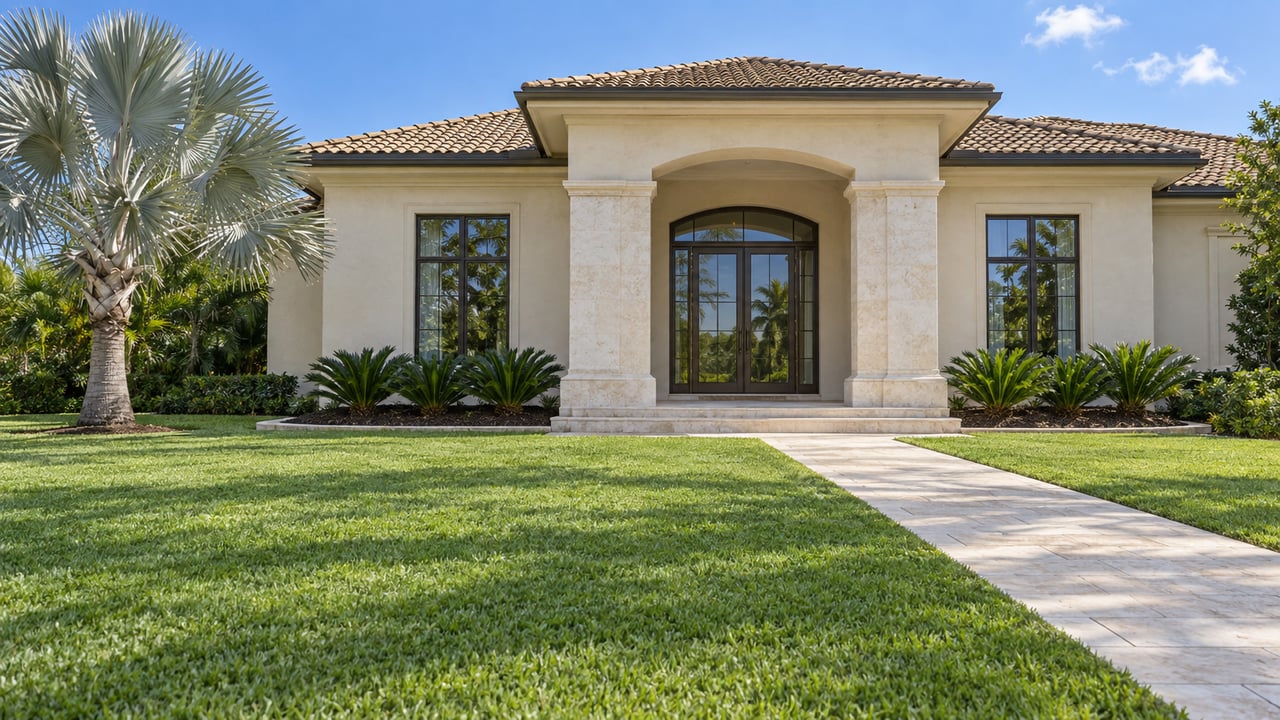
Villas are detached single-family homes in neighborhoods such as Lucarno, Cabreo, and Cortile. Floor plans commonly range from about 2,500 to more than 4,500 square feet, often single story or with a loft. You will see private courtyards, covered lanais, optional private pools, and 2 to 3 car garages as frequent features.
Maintenance-free options
Several villa neighborhoods are marketed as maintenance-free, with exterior and landscape care, and in some cases pool service, included in the neighborhood services. Lucarno and Cabreo are examples of lakeside enclaves that highlight this convenience in the developer’s materials. Explore the neighborhood context on the community’s location page and see how the builder describes maintenance-free villa living. Always confirm the exact scope in the neighborhood’s supplemental declaration and budget. Many villa buyers carry an HO-3 or HO-5 (dwelling) policy, but your policy type should match the neighborhood’s insurance allocations.
Lock-and-leave convenience
Both coach homes and maintenance-free villas are designed to reduce day-to-day upkeep, which is ideal if you travel or use your Mediterra home seasonally. Sub-associations often manage exterior elements for coach homes, while certain villa neighborhoods include exterior and landscape care so you can focus on enjoying the community. Mediterra also has staffed gates and a private Club and Beach Club with concierge-style services that complement a lock-and-leave lifestyle. Learn more about the community at Mediterra’s official site and review maintenance scope in your neighborhood documents.
The real difference: who maintains what
Mediterra’s Declaration sets a baseline and then assigns neighborhood-level responsibilities through supplemental declarations. By default, you maintain your own unit unless the Association or your Neighborhood Association assumes a task and charges for it as a neighborhood assessment. That is why two homes that look similar can have very different monthly or quarterly fees. The governing framework and party-structure rules are detailed in the Mediterra Declaration and on the Neighborhood Governance page.
Cost picture: HOA, Club, and taxes
HOA and condo assessments
Association fees often cover grounds maintenance, irrigation water, pest control, street and lighting upkeep, security, cable or internet, and insurance for common elements. The exact list and amounts vary by neighborhood and product type. Ask for the HOA budget and most recent financials for precise figures.
Club membership and APF
Some homes in Mediterra carry a recorded obligation to join at least as a social member of The Club at Mediterra upon transfer. The Club may also levy an Amenity Preservation Fee that can become a lien if not paid. Before you buy, confirm whether the home you are considering requires membership and request the current fee schedule and any one-time charges. The framework is outlined in the Mediterra Declaration.
CDD assessments on the tax bill
Parts of Mediterra fall within Community Development District boundaries. CDD special assessments appear on property tax bills and vary by parcel and neighborhood. Review the CDD context in the Mediterra CDD FAQ and ask your agent for a tax-bill breakdown on any home you are evaluating.
Price and fee snapshots from recent activity
- Coach home example: Porta Vecchio Way #101 was recently marketed around 1.865 million for approximately 2,589 square feet, illustrating how well-located coaches often sit in the low to mid 1 million range.
- Villa example: 16631 Cortona Lane in Lucarno has been marketed near 2.59 million for about 2,825 square feet, which fits the common pattern of villas pricing above comparable coach inventory.
- HOA examples: A Cabreo villa listing publicly reported an annual HOA near 9,148 dollars with additional quarterly items, while coach neighborhoods report condo or quarterly assessments that reflect exterior building and common-area coverage.
Amounts change as budgets and listings update. Use these as orientation, then verify exact numbers with the HOA estoppel letter, neighborhood supplemental declaration, and current Club fee schedule.
Coach home vs villa: quick comparison
| Factor | Coach Home | Villa |
|---|---|---|
| Ownership structure | Condominium or sub-association with shared structures | Detached single-family within a neighborhood association |
| Typical size | About 2,200 to 3,000 sq ft | About 2,500 to 4,500+ sq ft |
| Outdoor space | Screened lanai; shared grounds | Private yard or courtyard; optional private pool |
| Maintenance scope | Exterior and common areas often handled by sub-association | Many neighborhoods marketed as maintenance-free for exterior and landscape care; scope varies |
| Insurance tendency | Often HO-6 (confirm what the association insures) | Often HO-3 or HO-5 (confirm scope) |
| Price tendency | Generally lower entry price | Typically higher due to land and privacy |
| Leasing rules | Set by neighborhood documents; often a 30-day minimum and limits per year | Same framework; confirm neighborhood caps |
| Best fit | Seasonal owners who want turnkey living with strong value | Relocation buyers or seasonal owners who want more privacy and pool options |
What to verify before you choose
Use this checklist to confirm the details for any Mediterra home you consider:
- Identify the exact neighborhood for the listing and open its supplemental declaration and bylaws on the Neighborhood Governance page.
- Confirm who maintains the roof, exterior, landscaping, and any private pool for that specific home. The answer is in the supplemental declaration and, for condos, the condo documents. See maintenance and party-structure rules in the Mediterra Declaration.
- Request the association budget, reserve study, most recent financials, and the current monthly or quarterly dues with a list of included services. MLS notes are helpful, but the estoppel letter is definitive.
- Confirm whether the home requires Club membership and whether an Amenity Preservation Fee applies on transfer. Ask the Club for the current fee schedule and any one-time capital or initiation charges. The framework is in the Mediterra Declaration.
- Check for any CDD special assessments that will appear on the property tax bill. See the CDD FAQ.
- Clarify leasing rules for that neighborhood, including minimum lease term and the number of leases allowed per year. The Declaration allows a 30-day minimum and caps that are often set in the supplemental documents.
- Ask what the Association insures versus what you must insure. Then obtain quotes for the appropriate policy type.
- Walk the lot lines and view corridors if you want more outdoor privacy. If you travel often, confirm response times and service levels with the neighborhood manager.
How we help you decide with confidence
You deserve a clear, complete picture before you choose between a coach home and a villa in Mediterra. We help you compare layouts and views, unpack neighborhood rules and budgets, confirm insurance and membership details, and coordinate with association managers so there are no surprises. When you are ready, we curate a short list that matches your lifestyle and negotiate the right terms with confidence.
Ready to see the options that fit your goals in Mediterra? Schedule a private consultation with the Taranto Team of Naples Florida.
FAQs
What is a coach home in Mediterra?
- A coach home is a multi-unit, condominium-style residence with shared structures, typically 2 to 3 bedrooms plus a den and about 2,200 to 3,000 square feet, with exterior elements often maintained by the sub-association.
Are Mediterra villas truly maintenance-free?
- Many villa neighborhoods are marketed as maintenance-free for exterior and landscape care, and sometimes pool service, but the exact scope varies by neighborhood and must be confirmed in the supplemental declaration and budget.
Do I have to join the Club at Mediterra when I buy?
- Some homes carry a recorded obligation to join at least as a social member and may be subject to an Amenity Preservation Fee on transfer; confirm requirements and current fees for the specific home using the Mediterra Declaration and Club documents.
What insurance will I need for a Mediterra home?
- Many coach-home buyers carry an HO-6 policy, while many villa buyers carry an HO-3 or HO-5, but you should match your coverage to the neighborhood’s insurance allocations after confirming what the association insures.
Can I rent my Mediterra home seasonally?
- Leasing rules are set by neighborhood documents; the community framework permits a minimum lease term up to 30 days and limits on the number of leases per year, so check the supplemental declaration for the exact caps.
What fees should I budget for in Mediterra?
- Plan for neighborhood HOA or condo dues, the master association dues, any Club dues or Amenity Preservation Fee if applicable, and possible CDD special assessments that appear on the property tax bill.